Keep an eye out for more capital coming into the build-to-rent (BTR) and single-family rental (SFR) sector this year. Construction financing for strong BTR development will especially be more available going forward. Also, as more projects continue to lease-up, and with the sales market being slow, many developers will bridge out of their construction loans. Therefore, the bridge market will be extremely competitive for lease-up deals starting at around 20% leased. The highly liquid debt funds will continue to be a viable alternative for developers, offering higher leverage, non-recourse financing at higher interest rates, while regional and local banks will focus on expanding into new relationships. Many lenders will have to become more creative in order to win deals this year.
The possibility of lower rates in the later part of the year will entice some developers off the sidelines and into new projects. Do not expect cap rate reductions in major markets; however, lenders should be more focused on debt yield and cash flow to size their loans and less on true LTV determined by cap rates. Lenders are seeking projects that can generate a Yield on Cost (YOC) of 7%+. Developers are facing rising land costs, soft costs and construction costs and lenders that are underwriting based on non-trended rents. This means developers face rising CapEx costs on a project that will not deliver for 18 to 30 months, and lenders are assuming rents will not rise.
Watch for higher leverage, lower rates and flexibility on net worth and liquidity requirements. This increased leverage will also serve as a partial substitute to having to raise additional equity, which has been extremely difficult the past year or so. Some lenders will push leverage as high as 80% in order to win deals. Leverage on most new construction will top out at 75% for the best projects in supply-starved markets with the strongest sponsors. Construction lenders will size to an exit at no more than 65% LTV based on non-recourse agency or CMBS underwriting. Lenders will size the loan based on the takeout at completion, stabilization and refinance. Borrowers will see rates start at SOFR+ 450 basis points. Non-bank lenders will offer rates on non-recourse construction loans starting at SOFR+ 450 to 750 basis points. Stabilized properties can be financed at fixed rates in the mid-5% to mid-6% range depending on LTV, debt coverage and dollar amount.
Banks such as Bank OZK and Axos Bank will pick up market share. Construction loans will see 50% to 60% LTC from the banks. Pricing for construction loans will start at SOFR+ 225 to 300 basis points. Rates for bridge loans will start around 140 basis points over the five-year Treasury.
Debt fund and private money lenders such as Arbor Realty Trust, Benefit Street Partners, Builders Capital, CoreVest Finance, Anchor Loans, Forman Capital, Genesis, ACRES Capital, Arixa Capital, Lima One Capital, DLP Capital, BridgeInvest, Encore Enterprises, Fairbridge Asset Management, CV3, Renovo Financial, North River Partners, Amzak Capital Management, Trez Capital, Avatar Financial Group, Crestline Investors, LaSalle Debt Investors, Post Road Group, INCA Capital, Artes Capital, W Financial, Gelt Financial, Vale Capital, Partners Capital Solutions, Edgewood Capital and Seattle Funding Group will all be extremely active.
Debt funds and private money lenders will provide 65% to 80% LTC for construction loans. Bridge deals will see 65% to 85% LTV. Borrowers will see rates start at SOFR+ 375 to 550 basis points. Bridge loan pricing will start in the low 200 basis point over SOFR range.
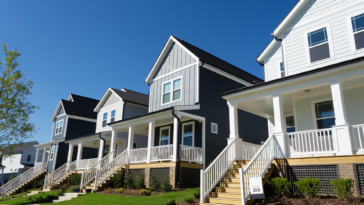
Resident demand for new, low-maintenance single-story and townhouse-style properties will remain strong. Although, while demand will be strong, getting projects to pencil will be the biggest problem a developer will face. Detached SFR-style rental communities have performed well in most markets, while the hybrid apartment/BTR projects have struggled to gain occupancy. Capital providers will target projects with more than 100 units that are detached with yards and garages. The toughest deals to finance are the projects that are single parceled with limited parking and no amenities.
Expect the trend for nicer amenities to remain throughout 2026. Keeping with a premium detached/attached with garage product and top of the market amenities will drive home buyers into the rental pool. Keep an eye out for a push toward townhomes and cottage properties with smaller spaces to meet demand. Developers are shifting toward more affordable units and seek to provide housing for those not looking for a large single-family home.
The sweet spot is workforce housing for tenants with dependable income such as nurses, first responders, teachers and government workers. There has been a major shift in the property management space to AI-driven systems, which will optimize manager fees and vendor timing. While onsite management will still be seen as a benefit for the development, that role would be optimized to eliminate a larger portion of overhead.
Watch for available capital in the top 100 MSAs in a blend of primary, secondary and tertiary markets. Lenders will seek markets with demonstrated job creation and net in-migration, while those with high tax/high regulation states will be avoided. The hottest markets will be in the Smile states, specifically Texas, Florida, Georgia, Tennessee, Arizona and the Carolinas. MSAs such as Phoenix, Dallas, Denver, Tampa, Fla., and Nashville, Tenn., will likely still see rent incentives and flat trajectory as they reach peak inventory in the next year. After the current inventory cycles, there should be fewer rent incentives and better lease-up. Lenders could start to consider more deals in the Midwest and Northeast and pivot away from overbuilt markets in the Southeast. Small markets, rural cities and areas with an over-concentration on any one industry, such as a military base, will find it hard to attract financing.
There will be more capital options for seasoned BFR developers who are leaders in their markets and product types. Newer developers will likely still see a higher entry point to the financing. Experience is the first driver for lenders, followed by cash and net worth. Borrowers with past experience buying, building, renting and selling for a profit will be sought after. Strong sponsors with solid post-closing liquidity of 10% to 20% of the loan amount 80% to 100% in net worth will be desired. Capital providers will want to make sure that a developer can deal with any issues that arise.