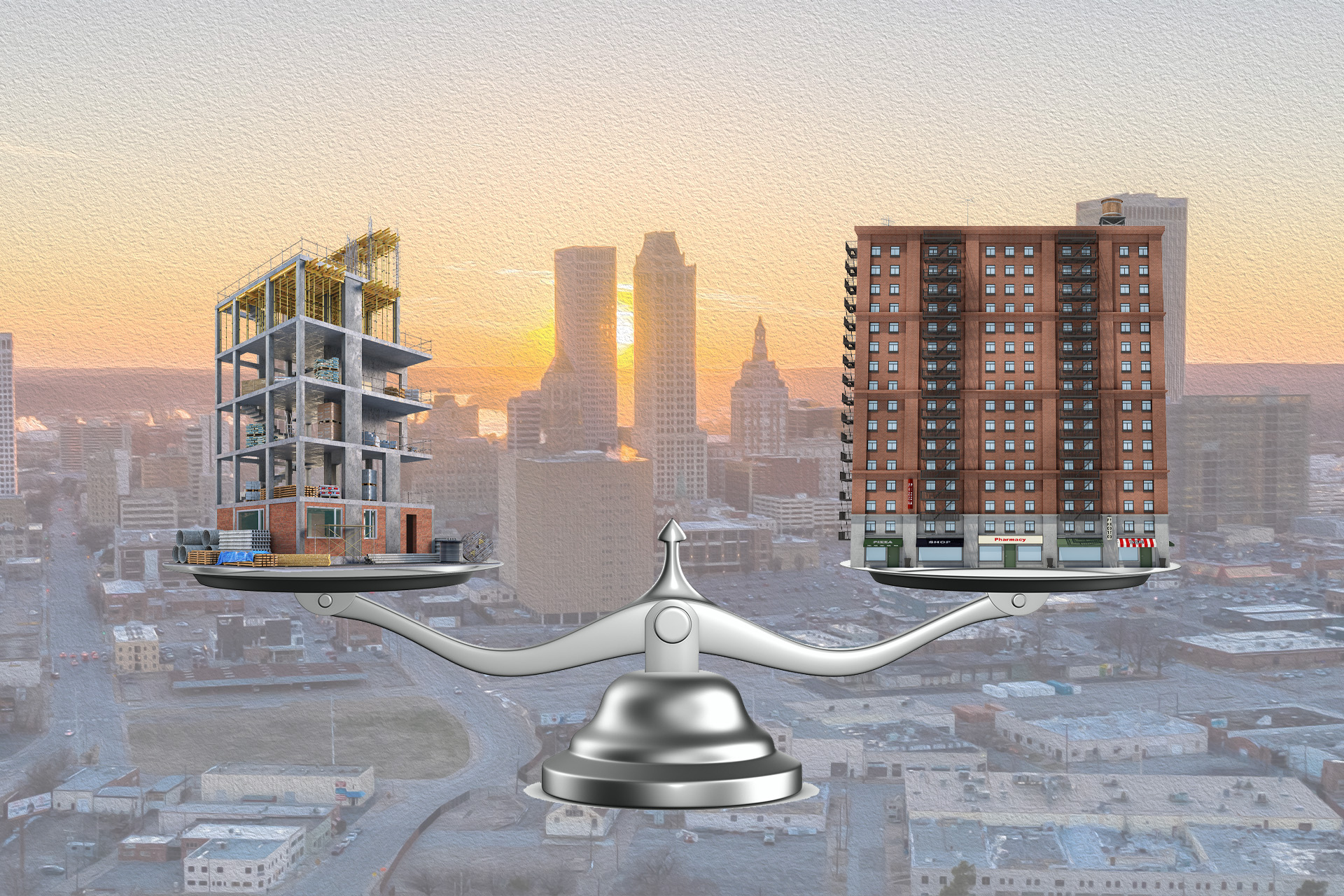
The pandemic reshaped the multifamily real estate landscape, resulting in a rollercoaster of trends in rent prices, vacancies and construction activity. After years of disruption, the market is showing signs of stabilization as new construction slows and renter demand strengthens.
But to fully understand the current market, let’s take a look back.
2020: Migration to suburbs
A temporary slowdown in leasing and construction activity during lockdowns and stay-at-home orders was followed by a lasting trend: migration from cities to suburban or rural communities. Landlords offered incentives to retain tenants, but strong factors drove the shift.
- Affordability: Higher rents and cost of living in cities coupled with the economic uncertainties of the time made saving money a priority.
- Remote work: The desire for more space, privacy, home offices and a quieter, slower-paced lifestyle made suburban living more appealing.
2021: Demand for multifamily housing surges
As more people set their sights on suburban living, demand for multifamily housing soared. Tight supply and strong renter interest drove up pricing and sparked a construction boom that would continue for several years.
2022-2023: Oversupply challenges the market
By 2023, 440,000 apartment units were completed — the highest in 36 years, according to RealPage. Much of this growth occurred in the Southern U.S., reflecting a broader trend of remote workers relocating to warmer climates.
Unfortunately, the surge in supply outpaced demand. The national vacancy rate climbed to 7.5% by the end of 2023 — up more than 200 basis points from its post-pandemic low, according to Mathews Real Estate Investment Services. High interest rates, affordability concerns and economic uncertainty softened demand.
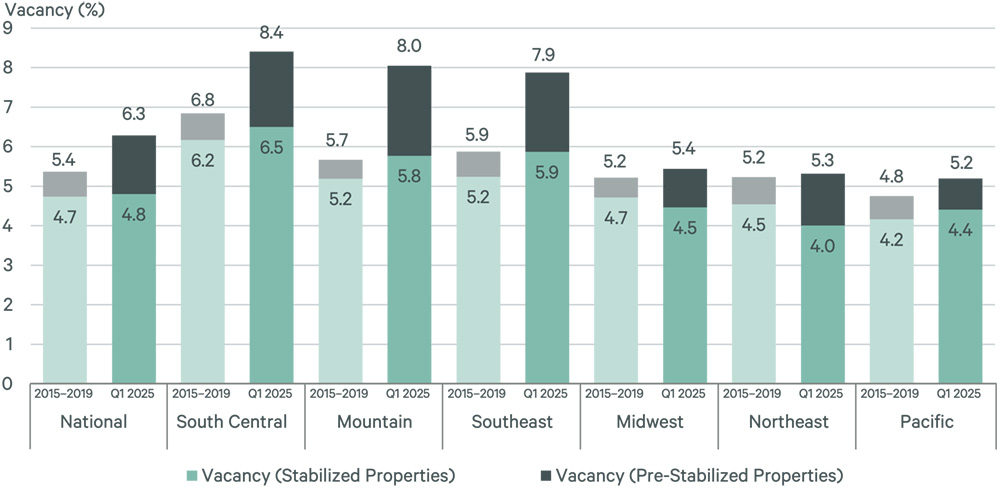
CBRE data suggests vacancy rates from the units built during the construction boom may be even higher due to “pre-stabilized properties” — new builds not yet 85% occupied and often excluded from official figures.
2024-2025: New construction slows, helping balance supply and demand
After a record-setting 450,000 new units in 2024, construction activity dropped in 2025, with only 70,600 units delivered, according to a CBRE report.
This slowdown helped rebalance supply and demand, resulting in the strongest first-quarter net absorption — the change in occupied units — since 2000. It marked the fourth consecutive quarter where renter demand outpaced new completions.
Additionally, the overall vacancy rate fell to 4.8% and the average monthly rent increased by 0.9% year-over-year. As long as rents remain affordable, this positive rent growth supports increased property values and buyer confidence.
“Multifamily fundamentals continue to strengthen due to strong renter demand and a diminishing construction pipeline. We expect the gains to continue this year and accelerate in 2026,” said Kelli Carhart, head of multifamily capital markets for CBRE.
Exceptions do exist among some of the nation’s largest metros; Los Angeles, Detroit, San Diego and Newark-Jersey City, N.J., are expected to experience an increase in deliveries, according to RealPage. Even so, rent growth remains strongest in regions with historically low supply volumes.
Renting becomes more cost effective
Another shift in the multifamily market is the growing cost gap between renting and owning. According to a Newmark report, the monthly difference has widened to $1,210 per month — nearly three times the long-term average of $432. It now costs $778 more per month to own a home than it did a few years ago to rent a comparable property.
After years of disruption, the multifamily market is showing signs of stabilization as new construction slows and renter demand strengthens. RealPage predicts an additional 34% decrease in deliveries in the next 12 months, while occupancy rates stay steady into 2026. With the addition of renting becoming a more affordable option, the outlook for the multifamily market is optimistic.